Low water pressure in house plumbing can come from a closed valve, blocked fixture, hidden leak, worn regulator, or supply problem. One weak faucet often has a local blockage. Weak flow at every fixture may point to pipes, a pump, a tank, or the public water supply. Plainview Plumbing can help find the source safely.
A sudden change needs attention, especially when many fixtures lose flow. A slow shower may be easy to fix, while damp walls, noisy pipes, or cloudy water may show a deeper fault. The checks below help homeowners, tenants, and property owners narrow down the cause without taking unsafe risks.
Table of Contents
- What causes low water pressure in a house?
- How can I tell where the pressure problem is coming from?
- What should I check first when water pressure drops?
- Can a clogged pipe or fixture cause low water pressure?
- How do pressure regulators and water supply systems affect pressure?
- Can I fix low water pressure myself?
- When should I call a plumber about low water pressure?
- Frequently Asked Questions
- Key takeaways
- Conclusion
What causes low water pressure in a house?
Low pressure can come from the water supply, the building’s plumbing, or one blocked fixture. Common causes include closed shutoff valves, clogged aerators, damaged pipes, leaks, pressure regulator faults, and changes in the public water system. First, find out whether the problem affects one outlet or the whole property.
Common household and municipal causes
A shutoff valve may have moved during repair work. A valve that is partly open can limit water flow. A pressure-reducing valve may also wear out over time. This device controls incoming water pressure before water reaches the home’s fixtures.
Older metal pipes can narrow inside as rust and minerals build up. A leak can reduce flow before water reaches a tap. In some homes, a failing pump, low tank level, or blocked filter can cause the same symptom.
The public supply may also have lower pressure during repairs, high demand, or a nearby main break. A property manager or local water provider may know about planned work. Plainview Plumbing can help Plainview property owners separate a supply concern from a private plumbing fault.
How pressure problems differ from flow problems
Pressure is the force that pushes water through a pipe. Flow is the amount of water that reaches an outlet over time. A fixture may have normal pressure at the pipe but poor flow because its screen or valve is blocked.
This difference matters during testing. If water starts strongly but weakens when another fixture opens, the system may have a supply or pipe restriction. If only one shower or faucet performs poorly, the problem is more likely local.
How can I tell where the pressure problem is coming from?
The location of the weak flow gives the best early clue. Test several fixtures, including a bathroom faucet, kitchen faucet, shower, and outdoor spigot. Note whether cold water, hot water, or both sides are affected.
Checking whether one fixture or the whole house is affected
Run one fixture at a time. Then open two fixtures and watch what changes. If only one outlet is weak, clean its aerator or showerhead first. A blocked cartridge or stop valve may also limit that fixture.
If every outlet is weak, check the main shutoff valve and ask nearby properties whether they have the same issue. Tenants should report the change to the owner or manager. A sudden whole-house drop needs more care than one slow tap.
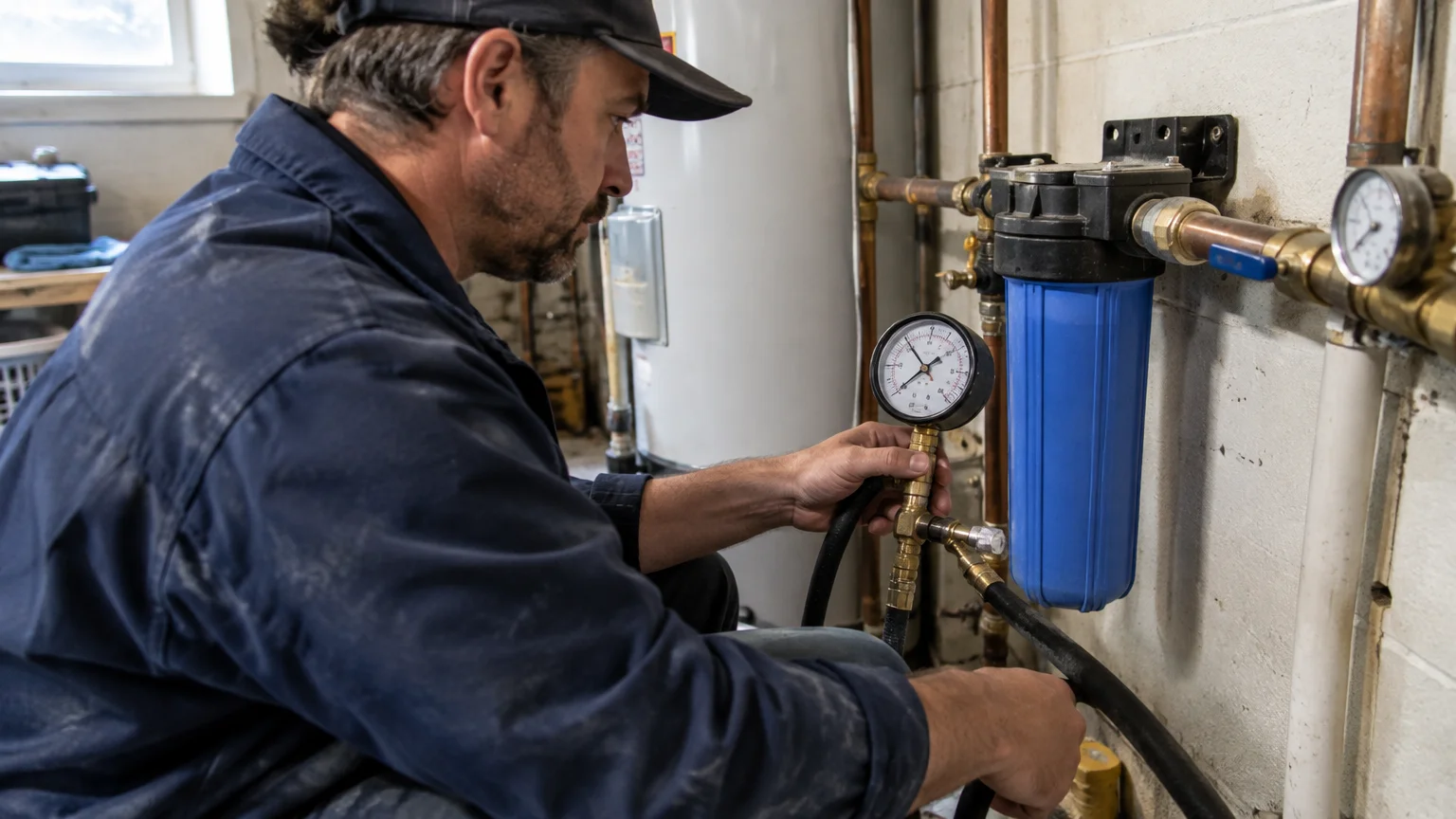
A pressure gauge can help a trained person compare static pressure with pressure while water runs. Static pressure is the reading when no fixture is open. Flow pressure is the reading while water moves. A large drop between the readings can point to a restriction or failing part.
Signs of a private plumbing issue versus a water-supply issue
A private issue may affect only one property. It may come with dripping sounds, wet cabinets, stained ceilings, water meter movement, or pressure that changes sharply when fixtures run. A supply issue may affect several nearby buildings at once.
Do not open a street-side meter box or change public equipment. Those parts may belong to the water provider. A licensed plumber can test the home’s side of the system and explain what the property owner controls.
What should I check first when water pressure drops?
Start with simple visual checks before removing parts or opening walls. Confirm that the main shutoff valve is fully open, then inspect accessible fixtures and pipes. Stop if water is near electrical equipment or if a pipe appears cracked.
Inspecting shutoff valves, faucets, and visible pipes
Look under sinks, behind toilets, near the water heater, and where the main line enters the home. A small handle should normally be fully open, but force can damage an old valve. Do not turn anything that belongs to a shared building or public system without permission.
Remove a faucet aerator only if it comes off easily. Rinse away grit and put the parts back in the same order. A clogged showerhead may need soaking and rinsing. A damaged cartridge usually needs replacement by someone who knows the fixture.
Check visible pipes for wet spots, green marks, rust, or water stains. Listen for water running when all fixtures are closed. These signs can point to a hidden leak rather than a pressure fault.
Checking for leaks, clogs, and recently changed fixtures
Think about what changed before the pressure dropped. Recent plumbing work, a new faucet, a water heater repair, or a shutoff valve replacement may have left debris in a line. Building work can also disturb sediment that later blocks screens.
A toilet that keeps running can waste water and reduce available flow in some systems. Common causes include a worn flapper, the wrong chain length, or a faulty fill valve. A small adjustment may help, but constant refilling should not be ignored.
If the water meter moves while all water is off, the property may have a leak. Leaks & Burst Pipes need prompt attention when water is visible or damage is spreading. Plainview Plumbing serves Plainview and can check warning signs before they become a larger repair.
Slow drains can occur at the same time as other plumbing trouble, but a drain clog does not usually lower supply pressure. Drain Cleaning may help with backed-up or slow drains, while a pressure test is needed for weak water flow. Keep these problems separate when checking the system.
Can a clogged pipe or fixture cause low water pressure?
Yes. Mineral buildup, rust, sediment, and damaged parts can narrow the path where water flows. The blockage may sit inside an aerator, showerhead, cartridge, valve, filter, or older supply pipe.
Mineral buildup in aerators, showerheads, and valves
Small screens catch grit before it reaches the outlet. Over time, those screens can fill with sand or mineral deposits. This often causes one faucet to run slowly while nearby fixtures work normally.
Showerheads may also collect deposits around their small openings. Cleaning the removable head can be a safe home task when the fitting is in good shape. A tenant should follow the lease rules and avoid changes that could damage the fixture.
If cleaning does not help, the blockage may be inside the cartridge or supply valve. Do not keep forcing a stuck part. Old fittings can break and release water quickly.
When corrosion or pipe damage restricts water flow
Corroded pipes may become narrow inside even when the outside looks sound. Flakes can move through the system and block screens. A pipe can also bend, collapse, or become damaged during building work.
These problems often affect more than one fixture. They may also cause discolored water, leaks, banging sounds, or repeated clogs. Pipe replacement may be needed when the restriction is inside an area that cannot be reached easily.
A professional can compare readings at different points and inspect exposed pipework. Water Heater Repair may be needed when weak hot water flow affects only the hot side and the heater’s inlet screen or valve is restricted. If the unit cannot be repaired safely, water heater replacement may be discussed.
How do pressure regulators and water supply systems affect pressure?
Pressure regulators, tanks, pumps, filters, and public mains all affect the water that reaches a fixture. A fault in any one part can create weak or changing flow. The right repair depends on testing, not guesswork.
What a pressure-reducing valve does
A pressure-reducing valve lowers incoming supply pressure to protect household pipes and fixtures. Its inner parts can wear, stick, or collect debris. When that happens, pressure may stay low throughout the building or change when water use begins.
The valve may be near the main shutoff or where the service line enters the property. It should not be adjusted without proper testing. Too much pressure can damage fixtures, while too little pressure can make normal tasks hard.
A plumber may test pressure before and after the valve. This helps show whether the regulator is restricting flow. The same test can reveal a blocked filter or another control device.
How tanks, pumps, and municipal supply conditions can matter
Homes with storage tanks or booster pumps depend on those parts for steady service. A low tank level, blocked inlet, electrical fault, or pump problem may reduce flow. Water Tanks need regular checks so valves, connections, and stored water remain reliable.
Municipal conditions can change during main repairs or periods of high demand. Ask nearby residents whether their pressure changed too. If several homes have the same problem, the water provider may need to inspect the supply.
Emergency Plumbing is right when a pressure drop comes with a burst pipe, flooding, or a fast leak. Shut off the main water supply when safe. Stay clear of damaged electrical equipment.
Can I fix low water pressure myself?
Homeowners can safely clean a removable screen, check an accessible valve, and look for visible leaks. They should not open pressurized equipment, alter public supply parts, or work near gas or electrical hazards. Simple checks are useful, but they should not delay urgent repairs.
Safe troubleshooting steps for homeowners and tenants
Use this basic order:
- Check whether one fixture or the whole property is affected.
- Confirm that accessible shutoff valves are fully open.
- Clean a removable aerator or showerhead if it is safe.
- Look for wet spots, stains, running toilets, and odd sounds.
- Ask the manager or water provider about wider supply problems.
Turn off the main valve if a pipe is spraying or a leak is spreading. Dry the area only when it is safe. Tenants should report the issue quickly instead of making permanent repairs without approval.
Repairs that require a licensed plumber
A licensed plumber should inspect hidden leaks, damaged pipes, pressure regulators, pumps, and whole-house pressure faults. Professional help is also needed when a repair requires soldering, cutting pipe, opening walls, or working around gas appliances.
Anyone checking for gas leaks should not use a flame. A gas smell requires leaving the building and contacting the gas utility or emergency services from a safe place. Water pressure work should never create a new safety risk.
When should I call a plumber about low water pressure?
Call a plumber when the problem affects the whole property, returns after cleaning, or comes with signs of leaks or pipe damage. Prompt help is also wise when the home has old pipes, a tank, a pump, or a pressure regulator that has not been tested.
Warning signs of leaks, pipe damage, or serious system faults
Call for professional help when any of these signs appear:
- Water stains, damp walls, soft flooring, or mold-like odors
- A meter that moves while all fixtures are closed
- Sudden pressure loss throughout the property
- Rusty water, repeated clogs, or flakes in faucet screens
- Loud banging, hissing, or water sounds behind walls
- A burst pipe, flooding, or water near electrical equipment
A pressure problem that starts after plumbing work also needs review. Debris may be trapped in a valve, or a connection may not be fully open. Quick testing can help keep the issue from spreading to other fixtures.
What a professional pressure diagnosis may include
The plumber may ask when the problem began and which fixtures are affected. They may check static and flowing pressure, inspect valves, examine visible pipes, and test the regulator. They may also look for leaks and compare hot-water flow with cold-water flow.
The final repair depends on the cause, access, parts, damage, and urgency. A blocked screen is usually simpler than a failed regulator or hidden pipe. The plumber should explain the findings and confirm the work in a quote before repairs begin.
Frequently Asked Questions
Why does water pressure drop in only one faucet?
One weak faucet usually has a local blockage. The aerator, cartridge, stop valve, or flexible connector may contain grit or mineral buildup. Rinsing an aerator can help when the part comes off safely. If the problem remains, a plumber can inspect the fixture without assuming the whole house has low pressure.
Can a running toilet cause low water pressure?
A running toilet normally wastes water instead of causing a lasting pressure fault. It can still affect flow in some homes, especially when the supply is limited or several fixtures run together. Check the flapper, chain, and fill valve. If the toilet keeps running after a simple adjustment, arrange a repair.
How can someone check for a water leak?
First, close every faucet and stop appliances that use water. Watch the water meter if the property has safe access to it. Movement may suggest a leak, but it does not show its location. Wet spots, stains, musty smells, and hissing sounds also need professional testing.
Is low water pressure a plumbing emergency?
Low pressure alone is not always an emergency. It becomes urgent when it comes with a burst pipe, fast leak, flooding, unsafe electrical conditions, or sudden whole-house failure. Shut off the water when safe, keep away from hazards, and seek Emergency Plumbing help when damage is active.
Does a water heater cause weak water pressure?
A water heater may cause weak flow on the hot side only. Sediment, a restricted inlet valve, or a blocked screen can reduce hot-water delivery. If cold water is also weak, the cause may be elsewhere. A plumber can test both sides and decide whether Water Heater Repair or water heater replacement is the better next step.
Key takeaways
- Test several fixtures to learn whether the fault is local or widespread.
- Check accessible valves, aerators, showerheads, leaks, and recent plumbing changes.
- Do not adjust public equipment or open pressurized parts without training.
- Whole-house pressure loss may involve a regulator, pump, tank, pipe, or supply issue.
- Call a plumber when pressure loss comes with leaks, damage, flooding, or repeated failure.
Conclusion
Low water pressure can come from a small blocked screen or a serious pipe and supply fault. Careful checks help identify the likely source, but they cannot replace a full diagnosis when the problem affects the whole property. Plainview Plumbing helps property owners understand pressure concerns and choose a safe next step.
Contact us to arrange professional help for persistent low water pressure.